
We’re excited to announce a major new feature in the latest NetTrack release: Envelope-Style Budgeting.
This update brings one of the most effective and proven budgeting methods into NetTrack—while keeping everything automatic, connected, and easy to use.
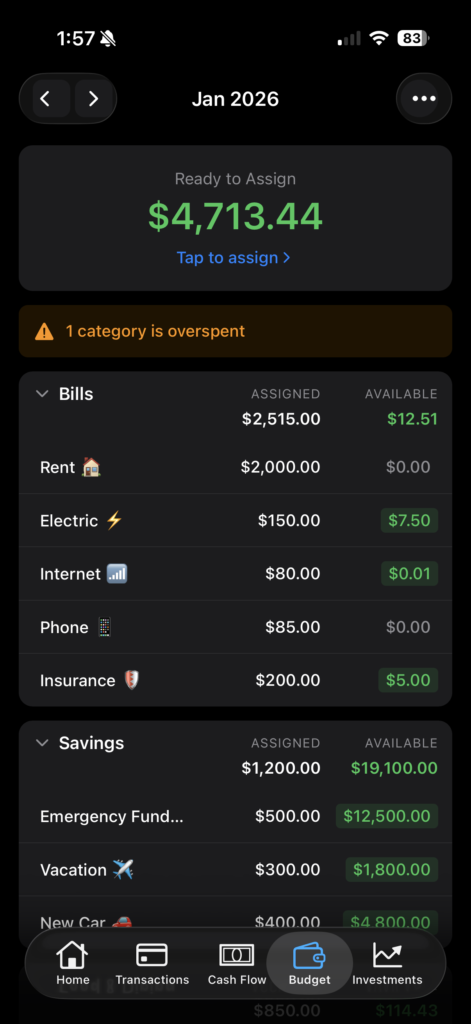
What Is Envelope-Style Budgeting?
Envelope budgeting is based on a simple principle: every dollar has a job.
Instead of reviewing your spending after the month is over, you proactively assign money into categories (or “envelopes”) like Rent, Groceries, Dining, or Savings. As you spend, those envelopes are reduced in real time so you always know where you stand.
Automatic by Default
One of the biggest advantages of NetTrack’s envelope budgeting is that there’s nothing extra you need to do.
Transactions from your connected bank and credit card accounts are automatically picked up and applied to the correct budget categories. As soon as a transaction posts, your envelopes update—no manual entry, no reconciliation, and no spreadsheets.
This means:
- Your available balances stay accurate
- Overspending is caught immediately
- You always know exactly how much you can still spend
How It Works in NetTrack
With the new Budget tab, you can now:
- Assign your income to specific categories each month
- See your “Ready to Assign” balance at a glance
- Watch envelopes update automatically as transactions come in
- Get alerts when a category goes overspent
- Group categories like Bills, Savings, and Goals for clarity
- Carry balances forward or reset monthly—your choice
Everything stays in sync with your real financial activity.
Available Now
Envelope-style budgeting is available now in the latest NetTrack release.
Just head to the Budget tab, assign your dollars, and let NetTrack handle the rest.
As always, feedback is welcome—this is a foundational feature and we’re excited to keep building on it.
Here’s to more intentional spending and total financial clarity.